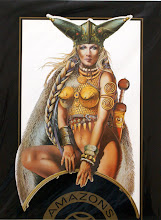
Nothing is known about Bodik, whose book cover art appeared on what would seem to be an American family saga, a genre that flourished in the 1970s and 1980s, although it had its roots in such popular novels as The Forsyte Saga by John Galsworthy and The Whiteoaks of Jalna by Mazo de la Roche.
Examples of S. L. Bodik's artwork can be found for sale at the Illustration Art Gallery.
Wednesday, December 19, 2012
Wednesday, December 12, 2012
Carl Barks
Carl Barks was nicknamed "The Duck Man" because of the quality of his work on Disney's Donald Duck. To Barks goes the praise for creating many of the inhabitants of Duckburg, the supporting cast featured in Walt Disney's Comics and Stories for which Barks was drawing in the 1940s.
Carl Barks was born in Merrill, Oregon, on 27 March 1901, the son of William Barks and his wife Arminta Johnson. Although he had a brother (two years older), Barks described himself as a rather lonely child, his nearest neighbour being over half a mile away from his parents' farm. The local school had only eight or ten students although Barks later recalled that it offered a good education. In 1908 the family moved to Midland, Oregon, closer to the railroad, where they established a new stock-breeding farm.
The immediate success of this venture meant that within three years the family were able to move to Santa Rosa, California, where William began cultivating vegetables and orchards. Profits were slim and William's anxiety over their financial difficulties led to a nervous breakdown and the family returned to Merrill in 1913.
Barks completed his education in 1916, in part concluded because he was suffering from a hearing disability; it was in the same year that his mother died and Barks had a range of jobs – farmer, woodcutter, mule driver, cowboy and printer. In 1918 he moved to San Francisco, California, and found work with a small publishing firm.
His early interest in drawing had been developed through a correspondence course, although Barks had only taken four lessons because he had so little free time. Now in San Francisco and, in 1921, married to Pearl Turner, he began selling drawings to newspapers. Despite returning to Merrill in 1923 with his growing family (two daughters born in 1923 and 1924), he continued to submit drawings and sold to Judge and the Calgery Eye-Opener. He was offered the editorship of the latter, a Minneapolis-based cartoon magazine, where he earned $90 a month for scripting and drawing most of the contents. He and Pearl were divorced in 1930 and Barks met Clara Balken in Minneapolis and married her in 1938.
In 1935 he learned that Walt Disney was seeking artists and moved to Los Angeles where he was hired at a starting salary of $20 a week. He worked initially as an "inbetweener", drawing the movements of characters between key poses. In 1937, his success at submitting gags led to his transfer to the story department where he first worked on the Donald Duck cartoon 'Modern Inventions'. Over the next few years he contributed to a number of Donald's cartoons, including the first appearance of Huey, Dewey and Louie in 'Donald's Nephews' (1938).
Barks suffered from sinus problems caused by the air conditioning in the Walt Disney art studio and left in 1942. He had then recently collaborated with Jack Hannah – who also worked in the Donald Duck story department – on a number of comic strips for Dell, Pluto Saves the Ship published in Large Feature Comics and the 64-page one-shot Donald Duck comic Donald Duck Finds Pirate Gold in Four Color Comics, both published in 1942.
Barks relocated to the Hemet/San Jacinto area east of Los Angeles where he set up a chicken farm, which failed. Barks, did, however, establish himself with Dell's Walt Disney's Comics and Stories as both the author and artist of numerous stories. His first story, 'The Victory Garden', was published in April 1943 and was followed by some 500 tales featuring the Disney ducks, his creations including Scrooge McDuck (1947), Gladstone Gander (1948), The Beagle Boys (1951), The Junior Woodchucks (1951), Gyro Gearloose (1952), Cornelius Coot (1952), Flintheart Glomgold (1956), John D. Rockerduck (1961) and Magica De Spell (1961).
During this time, Barks divorced his second wife and became acquainted with his third, Margaret Wynnfred Williams, known as Gare, who exhibited paintings locally. They married in 1954.
Although Barks' work was published anonymously, his name became known to fans around 1960. He continued to draw strips until 1966 when he retired, although he was persuaded to script stories until the 1970s. He painted in oils and exhibited and sold at local art shows. In 1971, he was granted permission by Disney's Publications Department to paint scenes from his various stories. When fans learned of this, Barks was inundated with requests and had to announce in 1974 that he was no longer taking commissions.
Duck paintings by Barks began to attract large sums at auction and unauthorized prints led to Disney withdrawing permission from Barks. They relented in 1981 following a campaign by Star Wars producer Gary Kurtz and Conan the Barbarian screenwriter Edward Summer. Summer edited Uncle Scrooge McDuck: His Life and Times (1981), a collection of Barks' tales alongside a new story illustrated by Barks with watercolour illustrations.
The ambitious Carl Barks Library was published in 1984-1990, the thirty volumes reprinting every Disney comic strip written or drawn by Barks. Gladstone Publishing subsequently produced the Carl Barks Library in Color (1992-98). Barks appeared at his first Disney convention in 1993 and, in 1994, embarked on an 11-country tour of Europe. A retrospective of Barks' work was first held in 1994 and was shown around ten cities, attracting over 400,000 visitors.
In the 1980s, Barks had moved to Grants Pass, Oregon, close to where he grew up. His wife died in March 1993. Barks survived a further seven years before he also died whilst undergoing chemotherapy for leukemia, on 25 August 2000, aged 99.
Examples of Carl Barks' artwork can be found for sale at the Illustration Art Gallery.
Carl Barks was born in Merrill, Oregon, on 27 March 1901, the son of William Barks and his wife Arminta Johnson. Although he had a brother (two years older), Barks described himself as a rather lonely child, his nearest neighbour being over half a mile away from his parents' farm. The local school had only eight or ten students although Barks later recalled that it offered a good education. In 1908 the family moved to Midland, Oregon, closer to the railroad, where they established a new stock-breeding farm.
The immediate success of this venture meant that within three years the family were able to move to Santa Rosa, California, where William began cultivating vegetables and orchards. Profits were slim and William's anxiety over their financial difficulties led to a nervous breakdown and the family returned to Merrill in 1913.
Barks completed his education in 1916, in part concluded because he was suffering from a hearing disability; it was in the same year that his mother died and Barks had a range of jobs – farmer, woodcutter, mule driver, cowboy and printer. In 1918 he moved to San Francisco, California, and found work with a small publishing firm.
His early interest in drawing had been developed through a correspondence course, although Barks had only taken four lessons because he had so little free time. Now in San Francisco and, in 1921, married to Pearl Turner, he began selling drawings to newspapers. Despite returning to Merrill in 1923 with his growing family (two daughters born in 1923 and 1924), he continued to submit drawings and sold to Judge and the Calgery Eye-Opener. He was offered the editorship of the latter, a Minneapolis-based cartoon magazine, where he earned $90 a month for scripting and drawing most of the contents. He and Pearl were divorced in 1930 and Barks met Clara Balken in Minneapolis and married her in 1938.
In 1935 he learned that Walt Disney was seeking artists and moved to Los Angeles where he was hired at a starting salary of $20 a week. He worked initially as an "inbetweener", drawing the movements of characters between key poses. In 1937, his success at submitting gags led to his transfer to the story department where he first worked on the Donald Duck cartoon 'Modern Inventions'. Over the next few years he contributed to a number of Donald's cartoons, including the first appearance of Huey, Dewey and Louie in 'Donald's Nephews' (1938).
Barks suffered from sinus problems caused by the air conditioning in the Walt Disney art studio and left in 1942. He had then recently collaborated with Jack Hannah – who also worked in the Donald Duck story department – on a number of comic strips for Dell, Pluto Saves the Ship published in Large Feature Comics and the 64-page one-shot Donald Duck comic Donald Duck Finds Pirate Gold in Four Color Comics, both published in 1942.
Barks relocated to the Hemet/San Jacinto area east of Los Angeles where he set up a chicken farm, which failed. Barks, did, however, establish himself with Dell's Walt Disney's Comics and Stories as both the author and artist of numerous stories. His first story, 'The Victory Garden', was published in April 1943 and was followed by some 500 tales featuring the Disney ducks, his creations including Scrooge McDuck (1947), Gladstone Gander (1948), The Beagle Boys (1951), The Junior Woodchucks (1951), Gyro Gearloose (1952), Cornelius Coot (1952), Flintheart Glomgold (1956), John D. Rockerduck (1961) and Magica De Spell (1961).
During this time, Barks divorced his second wife and became acquainted with his third, Margaret Wynnfred Williams, known as Gare, who exhibited paintings locally. They married in 1954.
Although Barks' work was published anonymously, his name became known to fans around 1960. He continued to draw strips until 1966 when he retired, although he was persuaded to script stories until the 1970s. He painted in oils and exhibited and sold at local art shows. In 1971, he was granted permission by Disney's Publications Department to paint scenes from his various stories. When fans learned of this, Barks was inundated with requests and had to announce in 1974 that he was no longer taking commissions.
Duck paintings by Barks began to attract large sums at auction and unauthorized prints led to Disney withdrawing permission from Barks. They relented in 1981 following a campaign by Star Wars producer Gary Kurtz and Conan the Barbarian screenwriter Edward Summer. Summer edited Uncle Scrooge McDuck: His Life and Times (1981), a collection of Barks' tales alongside a new story illustrated by Barks with watercolour illustrations.
The ambitious Carl Barks Library was published in 1984-1990, the thirty volumes reprinting every Disney comic strip written or drawn by Barks. Gladstone Publishing subsequently produced the Carl Barks Library in Color (1992-98). Barks appeared at his first Disney convention in 1993 and, in 1994, embarked on an 11-country tour of Europe. A retrospective of Barks' work was first held in 1994 and was shown around ten cities, attracting over 400,000 visitors.
In the 1980s, Barks had moved to Grants Pass, Oregon, close to where he grew up. His wife died in March 1993. Barks survived a further seven years before he also died whilst undergoing chemotherapy for leukemia, on 25 August 2000, aged 99.
Examples of Carl Barks' artwork can be found for sale at the Illustration Art Gallery.
Wednesday, December 5, 2012
Harry Bishop
Harry Bishop is one of the finest artists in the UK who has turned his gaze – and talent – to the wild west. For most of his career he drew western comic strips, and it was his work on 'Gun Law' – based on the television show Gunsmoke starring James Arness as Matt Dillon – for the Daily Express for which he is best remembered. With its superb figurework and accurate portrayals of horse and rider, Bishop drew on influences ranging from Tony Weare to Remington Russell and Norman Rockwell. He was awarded the British Cartoonists Award in 1965. He took over the ‘Wes Slade’
strip in the Sunday Express in 1980 and this also earned him an award
from the Strip Illustrators Society in 1981.
Born in Painswick, Gloucestershire, on 3 May 1920, Harry Bishop was a fan of illustrators like D. C. Eyles, Stanley Woods and H. M. Brock and was keen to attend art school, an interest supported by his parents. He was educated at Hatherley School and the Gloucester School of Art, leaving the latter in 1937 to travel abroad.
Bishop served in the R.A.F. during the war – mostly abroad and for some time with Bomber Command – and recommenced his art education in 1947, using his ex-serviceman's gratuity to began studying at Wimbledon College of Art. Graduating in 1952, he took up a position as a teacher at Mitcham Grammar School.
At the same time he began drawing comic strips for the Amalgamated Press, his earliest known work appearing in Comic Cuts, where he took over the artistic chores for the adventures of 'Cal McCord', the real-life cowboy and actor, in May 1953. Comic Cuts came to a close soon after, but Bishop was to find a regular home for his work in Swift, which was about to be launched in March 1954. His first strip, 'Tom Tex and Pinto' ran for eighteen months, during which time he also took over the colour cover of Swift, drawing 'Tarna Jungle Boy' from June 1954.
After this rapid rise, Bishop found work on Junior Express drawing 'Wyatt Earp', 'Red Cloud' and 'Rex Keene', for Thriller Comics drawing 'Jesse James' and for Sun drawing 'Billy the Kid'. Through these strips he established himself as one of the leading western artists in the UK. In April 1957, he began drawing 'Gun Law' for Express Weekly, continuing the weekly strip until March 1961. A year earlier, in April 1960, the strip had begun appearing in the Daily Express. He continued to write and draw the strip for almost two decades.
Bishop continued to contribute to British comics, although often for brief periods only, drawing 'Smiley!' (Swift, 1958-59), 'Billy the Kid' (Lion, 1959), 'Tarna Jungle Boy' (Swift, 1962-63), 'Morg of the Mammoths' (Lion, 1963-64) and numerous one-off features for TV Express, Boys' World, Eagle and Princess. In 1970-85, Bishop was also a prolific illustrator for Deans.
After drawing a second strip for the Evening Standard, 'Judy and the Colonel', Bishop drew 'Tarzan' and 'The Saint' for TV Tornado and 'Blackbow the Cheyenne' briefly for Eagle before departing comics around 1967. He returned almost a decade later with 'The Wrangler', a brief one-off in Ally Sloper (1976), which year marked his debut in the Dutch weekly Eppo, where he drew the western 'Laben Tall' until 1977. 'Gun Smoke' ended in 1978.
Bishop brought the 'Wes Slade' series to a close in 1980-81 following the death of its originator, George Stokes, after which he concentrated on painting. He has produced surprisingly few paintings on western subjects, although a 'modest number' (around 30) were sold via Frost and Reed of Bond Street, London; he has, however, painted landscapes and other subjects and worked in most media, although he prefers pen and ink.
In 1984-85, an eye infection caused him to give up painting completely.
Artwork by Harry Bishop can be found for sale at the Illustration Art Gallery.
Born in Painswick, Gloucestershire, on 3 May 1920, Harry Bishop was a fan of illustrators like D. C. Eyles, Stanley Woods and H. M. Brock and was keen to attend art school, an interest supported by his parents. He was educated at Hatherley School and the Gloucester School of Art, leaving the latter in 1937 to travel abroad.
Bishop served in the R.A.F. during the war – mostly abroad and for some time with Bomber Command – and recommenced his art education in 1947, using his ex-serviceman's gratuity to began studying at Wimbledon College of Art. Graduating in 1952, he took up a position as a teacher at Mitcham Grammar School.
At the same time he began drawing comic strips for the Amalgamated Press, his earliest known work appearing in Comic Cuts, where he took over the artistic chores for the adventures of 'Cal McCord', the real-life cowboy and actor, in May 1953. Comic Cuts came to a close soon after, but Bishop was to find a regular home for his work in Swift, which was about to be launched in March 1954. His first strip, 'Tom Tex and Pinto' ran for eighteen months, during which time he also took over the colour cover of Swift, drawing 'Tarna Jungle Boy' from June 1954.
After this rapid rise, Bishop found work on Junior Express drawing 'Wyatt Earp', 'Red Cloud' and 'Rex Keene', for Thriller Comics drawing 'Jesse James' and for Sun drawing 'Billy the Kid'. Through these strips he established himself as one of the leading western artists in the UK. In April 1957, he began drawing 'Gun Law' for Express Weekly, continuing the weekly strip until March 1961. A year earlier, in April 1960, the strip had begun appearing in the Daily Express. He continued to write and draw the strip for almost two decades.
Bishop continued to contribute to British comics, although often for brief periods only, drawing 'Smiley!' (Swift, 1958-59), 'Billy the Kid' (Lion, 1959), 'Tarna Jungle Boy' (Swift, 1962-63), 'Morg of the Mammoths' (Lion, 1963-64) and numerous one-off features for TV Express, Boys' World, Eagle and Princess. In 1970-85, Bishop was also a prolific illustrator for Deans.
After drawing a second strip for the Evening Standard, 'Judy and the Colonel', Bishop drew 'Tarzan' and 'The Saint' for TV Tornado and 'Blackbow the Cheyenne' briefly for Eagle before departing comics around 1967. He returned almost a decade later with 'The Wrangler', a brief one-off in Ally Sloper (1976), which year marked his debut in the Dutch weekly Eppo, where he drew the western 'Laben Tall' until 1977. 'Gun Smoke' ended in 1978.
Bishop brought the 'Wes Slade' series to a close in 1980-81 following the death of its originator, George Stokes, after which he concentrated on painting. He has produced surprisingly few paintings on western subjects, although a 'modest number' (around 30) were sold via Frost and Reed of Bond Street, London; he has, however, painted landscapes and other subjects and worked in most media, although he prefers pen and ink.
In 1984-85, an eye infection caused him to give up painting completely.
Artwork by Harry Bishop can be found for sale at the Illustration Art Gallery.
Wednesday, November 28, 2012
Mary A Brooks
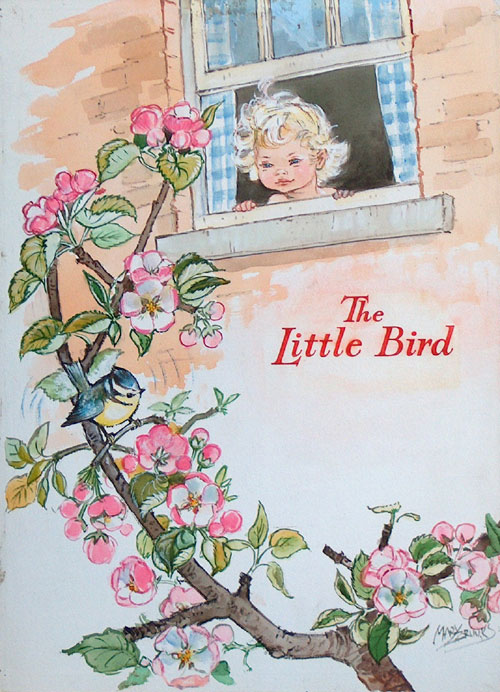
Mary Brooks (1922- ) was the illustrator of Enid Blyton's Noddy Gets Into Trouble (1954) and Noddy Meets Father Christmas (1955), having earlier contributed to The Enid Blyton Holiday Annual at least as early as 1951. She wrote and illustrated many books for nursery-age children in the 1960s ranging from early learning titles like One, Two, Three—123 (1966) and ABC—123 (1966) to illustrated animal books, books of rhymes and fairy stories.
Her artwork was, according to one online commentator, "charming and highly detailed whilst retaining a soft edge, and is often aimed at younger children. She was celebrated especially for her illustrated stories centering on animal family life." She also illustrated a number of nature scenes for Treasure magazine.
Her work appeared in a number of books published by Purnell (1978-80) and Dean (1986-87) and it is said that, even in her late eighties, she continues to paint.
Mary A. Brooks was married to Laurence William Penn in Dartford, Kent, in 1947. He died in 1989, aged 73.
PUBLICATIONS
Books
Evacuees. London & Bognor Regis, John Crowther, 1942.
Green Bacon. London & Bognor Regis, John Crowther, 1942.
Goggle the Frog (as M. B. Brooks). London, W. H. Cornelius (Success series), 1945.
Who Will Play With Me? London, Golden Pleasure Books, 1963.
One, Two, Three, 1, 2, 3. London & Melbourne, Ward Lock & Co., 1966.
Animal Adventures. London, Ward Lock, 1967.
Animal Paradise. London, Ward Lock, 1967.
Animal Wonderland. London, Ward Lock, 1967.
The Adventures of Rufus. London, Ward Lock, 1969.
Frisky and her Friends. London, Ward Lock, 1969.
Nursery Rhymes. London, Ward Lock, 1969.
Books Illustrated
Kimba by Paddy Smith. London, W. H. C., 1945 [Mary B. Brooks?]
The Adventures of Peppity the Pixie by Shirley M. Graham. London & Melbourne, Ward, Lock & Co., 1952.
Little Kanga's Pocket by Marie A. Battersby. London, Sampson Low, 1952.
Fun in Twistle Wood by Paddy Smith. London & Glasgow, Blackie & Son, 1953.
The Lonely Little Turtle by Marie A. Battersby. London, Sampson Low, 1953.
Grimm's Fairy Tales. London, Ward Lock, 1955.
Kandy meets the Bunny-Babes by David White. London, Sampson Low, 1957.
Kandy in Bunny-Babe Land by David White. London, Sampson Low, 1958.
Field Folk (verse) by Brenda G. Macrow. London, Blackie, 1958.
The New Big Sleep Book by Sheila Hodgetts. London, Sampson Low, 1959.
The Hat by Nova Rock, London & New York, Frederick Warne & Co., 1960.
Bobo and the Crocodile by Nova Rock. London & New York, Frederick Warne & Co., 1961.
Babies of the Wild (verse) by Brenda G. Macrow. London & Glasgow, Blackie, 1962.
Calling All Bears by Lilias Edwards. London, Peal Press, 1964.
Sleepy Time Tales by Sheila Hodgetts. London, Purnell, 1964.
ABC 123. London, Ward Lock, 1966.
Bo-Peep Rhymes. London, Sandle Brothers, 1966.
Calling All Pets by Lilias Edwards. London, Peal Press, 1966.
Hey Diddle Diddle Rhymes. London, Sandle Brothers, 1966.
Simple Simon Rhymes. London, Sandle Brothers, 1966
Jack and Jill Rhymes. London, Sandle Bros. & Ward Lock & Co., 1969.
Seven Little Australians, adapted from the story by Ethel Turner. London, Ward Lock, 1975.
Before I Go To Sleep by Barbara Hayes. Maidenhead, Purnell, 1978.
Baby Animal Stories by Barbara Hayes. Maidenhead, Purnell, 1979.
Sleepy Time Tales by Barbara Hayes. Maidenhead, Purnell, 1979.
Peppy the Little Fairy, and nine other tales by Barbara Hayes. Maidenhead, Purnell, 1980.
Pixie Peapod, and nine other tales by Barbara Hayes. Maidenhead, Purnell, 1980.
Pook Goes Bump, and nine other tales by Barbara Hayes. Maidenhead, Purnell, 1980.
Pucki the Piper, and nine other tales by Barbara Hayes. Maidenhead, Purnell, 1980.
A Visit to Fairyland by Barbara Hayes. Maidenhead, Purnell, 1980.
Best of Friends (verse) by Stewart Cowley. London, Dean, 1986.
Happy Days (verse) by Stewart Cowley. London, Dean, 1986.
In the Sunshine (verse) by Stewart Cowley. London, Dean, 1986.
Talking to God: Children's Prayers for Every Day by Barbara Hayes Page. Twickenham, Dean, 1987.
Favourite Toys (verse) by Stewart Cowley. London, Dean, 1988.
You can find examples of Mary Brooks's artwork at the Illustration Art Gallery.
Her artwork was, according to one online commentator, "charming and highly detailed whilst retaining a soft edge, and is often aimed at younger children. She was celebrated especially for her illustrated stories centering on animal family life." She also illustrated a number of nature scenes for Treasure magazine.
Her work appeared in a number of books published by Purnell (1978-80) and Dean (1986-87) and it is said that, even in her late eighties, she continues to paint.
Mary A. Brooks was married to Laurence William Penn in Dartford, Kent, in 1947. He died in 1989, aged 73.
PUBLICATIONS
Books
Evacuees. London & Bognor Regis, John Crowther, 1942.
Green Bacon. London & Bognor Regis, John Crowther, 1942.
Goggle the Frog (as M. B. Brooks). London, W. H. Cornelius (Success series), 1945.
Who Will Play With Me? London, Golden Pleasure Books, 1963.
One, Two, Three, 1, 2, 3. London & Melbourne, Ward Lock & Co., 1966.
Animal Adventures. London, Ward Lock, 1967.
Animal Paradise. London, Ward Lock, 1967.
Animal Wonderland. London, Ward Lock, 1967.
The Adventures of Rufus. London, Ward Lock, 1969.
Frisky and her Friends. London, Ward Lock, 1969.
Nursery Rhymes. London, Ward Lock, 1969.
Books Illustrated
Kimba by Paddy Smith. London, W. H. C., 1945 [Mary B. Brooks?]
The Adventures of Peppity the Pixie by Shirley M. Graham. London & Melbourne, Ward, Lock & Co., 1952.
Little Kanga's Pocket by Marie A. Battersby. London, Sampson Low, 1952.
Fun in Twistle Wood by Paddy Smith. London & Glasgow, Blackie & Son, 1953.
The Lonely Little Turtle by Marie A. Battersby. London, Sampson Low, 1953.
Grimm's Fairy Tales. London, Ward Lock, 1955.
Kandy meets the Bunny-Babes by David White. London, Sampson Low, 1957.
Kandy in Bunny-Babe Land by David White. London, Sampson Low, 1958.
Field Folk (verse) by Brenda G. Macrow. London, Blackie, 1958.
The New Big Sleep Book by Sheila Hodgetts. London, Sampson Low, 1959.
The Hat by Nova Rock, London & New York, Frederick Warne & Co., 1960.
Bobo and the Crocodile by Nova Rock. London & New York, Frederick Warne & Co., 1961.
Babies of the Wild (verse) by Brenda G. Macrow. London & Glasgow, Blackie, 1962.
Calling All Bears by Lilias Edwards. London, Peal Press, 1964.
Sleepy Time Tales by Sheila Hodgetts. London, Purnell, 1964.
ABC 123. London, Ward Lock, 1966.
Bo-Peep Rhymes. London, Sandle Brothers, 1966.
Calling All Pets by Lilias Edwards. London, Peal Press, 1966.
Hey Diddle Diddle Rhymes. London, Sandle Brothers, 1966.
Simple Simon Rhymes. London, Sandle Brothers, 1966
Jack and Jill Rhymes. London, Sandle Bros. & Ward Lock & Co., 1969.
Seven Little Australians, adapted from the story by Ethel Turner. London, Ward Lock, 1975.
Before I Go To Sleep by Barbara Hayes. Maidenhead, Purnell, 1978.
Baby Animal Stories by Barbara Hayes. Maidenhead, Purnell, 1979.
Sleepy Time Tales by Barbara Hayes. Maidenhead, Purnell, 1979.
Peppy the Little Fairy, and nine other tales by Barbara Hayes. Maidenhead, Purnell, 1980.
Pixie Peapod, and nine other tales by Barbara Hayes. Maidenhead, Purnell, 1980.
Pook Goes Bump, and nine other tales by Barbara Hayes. Maidenhead, Purnell, 1980.
Pucki the Piper, and nine other tales by Barbara Hayes. Maidenhead, Purnell, 1980.
A Visit to Fairyland by Barbara Hayes. Maidenhead, Purnell, 1980.
Best of Friends (verse) by Stewart Cowley. London, Dean, 1986.
Happy Days (verse) by Stewart Cowley. London, Dean, 1986.
In the Sunshine (verse) by Stewart Cowley. London, Dean, 1986.
Talking to God: Children's Prayers for Every Day by Barbara Hayes Page. Twickenham, Dean, 1987.
Favourite Toys (verse) by Stewart Cowley. London, Dean, 1988.
You can find examples of Mary Brooks's artwork at the Illustration Art Gallery.
Wednesday, November 21, 2012
Terry Bave
One of the stalwarts of British humour strips, Terry Bave retired in 2007 to enjoy some well-earned rest after worked in comics for 40 years. Bave's clear, unfussy humour strips were to be found in great numbers – he worked on six or seven characters at any one time – in Fleetway's humour comics in the 1970s, '80s and '90s.
Terence H. Bave was born in Bristol, Gloucestershire, in 1931. Inspired by American films and comics, which Bave sought out at newsagents selling American newspapers, he began drawing at an early age. His general education was disrupted by family moves and being twice evacuated during World War II. Bave estimated he attended eleven schools in as many years.
Returning to London in 1945, Bave took on full time work as a clerical assistant at the Post Office Savings Bank. One day a week he attended the Brook Green Day Continuation School until he was sixteen. It was here that he met Sheila Newton, who subsequently also worked at the Post Office bank.
From filling the margins and covers of his exercise books to posting regular topical cartoons on the Post Office bank notice board, Bave decided to turn his artistic inclinations into a career. At the age of seventeen he joined the Colonial Survey Department as a trainee cartographer, drawing maps with the aid of aerial photography. His first published cartoon was in the department’s magazine, The Drum.
Bave’s combined interest in films and cartoons led to his first professionally published cartoons in the pages of the film magazine Picturegoer and the home movie magazine The Pathescope Gazette. With this success in specialist magazines, Bave sought out others and, by the late 1950s, was also publishing regularly in Do-It-Yourself, TV Times, Fire! and Scooter. In a year, Bave could earn £100 from his cartoons. By then, he had joined a firm of commercial map makers but was contemplating another move. A commission to draw a cartoon design for a dog ointment carton led to an offer of work as a packaging designer for Stable Cartons Ltd.; Bave later moved to C. H. G. Jourdan Ltd. where he successfully designed fancy packaging during the heady days of the psychedelic sixties. At the same time, he became the art editor of The 9.5 Review, put together by enthusiasts of home movies following the demise of The Pathescope Gazette.
In 1967, and still keen to work in comics, Bave targetted Wham!, a recently-launched comic published by Odhams Press. Invited to meet editor Albert Cosser at the publisher’s Long Acre office, he was offered the opportunity to take over the strip “Sammy Shrink”, about a nine-inch-tall boy with normal-sized parents, which was languishing in the lower regions of the popularity charts.
Bave and his wife created their own character, “Baby Whamster”, a half-pager which they also scripted; he proved immediately popular as a mascot for Wham! and “Baby Smasher” was added to the line-up of Wham!’s sister paper, Smash!.
Bave was determined to make a go of comics and used every opportunity to learn more about what his audience wanted, particularly by involving himself in the school attended by his son, Russell (born in 1959). He helped with the school magazine, performed as a ventriloquist at school fetes and wrote a school play.
With the addition of work for annuals and worked sourced locally (including posters, letterheads, leaflets, display advertising, cartoons, etc.), Bave was able to turn freelance. However, Wham! was soon to be merged with Pow!, which promptly folded a few months later. Bave found work on annuals via King Leo Studios but that had all but dried up when the Baves received a letter from Jack Le Grand offering them work on a new paper. This was Whizzer & Chips, a title unlike any other on the market in that it was two comics in one.
Bave created some thirteen possible strips and was invited to write (with Sheila) and draw however many he could reasonably cope with on a weekly basis. Thus, when Whizzer & Chips debuted on 18 October 1969, it featured six strips by Bave: the full-page “Me and My Shadow”, “Ginger’s Tum”, “Hetty’s Horoscope” and “Aqua Lad”, plus half-pagers “Puddin’ Tops” and “Karate Kid” – to which “Nipper” was soon added.
Of these, “Me and My Shadow”, in which young ‘Smudger’ Smith is in constant battle with his own shadow, “Puddin’ Tops”, a brother and sister named after their pudding-top hairstyles, and “Karate Kid”, inspired by their son’s taking up of judo lessons, lasted until the mid-1970s.
One of Bave’s rejected ideas, “Eager Beavers”, was picked up by Buster, where it ran for eighteen months. The new comic Cor!! included Bave’s “Donovan’s Dad” and “Andy’s Ants”. In 1970, Bave and his family moved to a bungalow in Bembridge, on the Isle of Wight, where he and Sheila were to live for over forty years.
Promotional issues often involved creating new characters, and Bave’s creativity gave Whizzer & Chips “Jimmy Jeckle and Master Hide”, “The Scarey’s of St. Mary’s” and, most successfully, “The Slimms” in Cor!!, which capitalised on the contemporary slimming craze – although the portly Mum and Dad in the story had no desire to slim; it was their son, Sammy, who tried different ways each week to help them stick to diets or get some exercise. When Cor!! folded in 1973, the strip moved to Whizzer & Chips where it ran until 1979.
Another ‘two-in-one’ comic, Shiver &Shake, featured the spider “Webster” and, after a ghosting the strips on occasion, took over the lead characters of both sections, “Shiver” the ghost and “Shake” the elephant. New for Knockout was “My Bruvver”, in which poor Len is stuck each week with his tearaway younger brother, the little’un. “Sammy Shrink” was revived in Knockout before transferring to Whizzer &Chips and Bave also took over “Desert Fox” in Shiver and Shake and “Odd Ball” in Whizzer &Chips, the latter about a ball that could stretch and morph into any shape. Truly odd, it proved to be one of Bave’s longest-running strips, surviving in Whizzer & Chips until 1990.
The launch of Whoopee in 1974 brought with it two new Bave creations, “Toy Boy” (who, as his name implied, loved toys) and “Stoker, Ship’s Cat”, a hungry cat in the mould of Ginger. Other cat characters from Bave’s pen included “Police Dog and Cat Burglar” (Whizzer & Chips, 1975) and “Scaredy Cat” (Krazy, 1976-78). 1978 saw the creation of “Calculator Kid” for Cheeky Weekly but the late 1970s saw the merging of various papers, leaving Bave contributing only to Whizzer & Chips, Whoopee and various annuals and summer specials as the decade turned. “Barney’s Badges” (Wow!, 1982-83), “Good Guy” (Buster, 1983) and the feature “Top Class Comics” (School Fun, 1983-84) kept Bave busy.
The latter half of the 1980s saw fewer new releases from Fleetway, although Bave continued to contribute new characters, including “Pete’s Pop-Up Book” (Buster, 1985-88), “Double Trouble” (Nipper, 1987, Buster, 1987- ), “Mighty Mouth” (Nipper, 1987; Buster, 1987-90), “Melvyn’s Mirror” (Buster, 1990), “The Figments of Phil’s Imagination” (Buster, 1991-94) and “Imagine” (Buster, 1991).
Fleetway’s line of humour titles shrunk further, Whizzer & Chips finally merging with Buster in 1990 and Buster becoming a fortnightly in 1995, eventually folding in 2000. By then, Bave had established himself with rivals D. C. Thomson, ghosting a number of strips – including ‘Number 13’ and ‘Bash Street Kids’ for Beano before taking over ‘Winker Watson’ in Dandy (1991-2002). Over the next few years, Bave’s creations included ‘The Great Geraldoes’ (Beano, 1992-93), ‘Buster Crab’ (Dandy, 1998), ‘Inspector Horse and Jockey’ (Beano, 1999-2000 – a parody of Inspector Morse) and ‘Baby Herc’ (Dandy, 2003).
Examples of Bave's artwork can be found at the Illustration Art Gallery.
Terence H. Bave was born in Bristol, Gloucestershire, in 1931. Inspired by American films and comics, which Bave sought out at newsagents selling American newspapers, he began drawing at an early age. His general education was disrupted by family moves and being twice evacuated during World War II. Bave estimated he attended eleven schools in as many years.
Returning to London in 1945, Bave took on full time work as a clerical assistant at the Post Office Savings Bank. One day a week he attended the Brook Green Day Continuation School until he was sixteen. It was here that he met Sheila Newton, who subsequently also worked at the Post Office bank.
From filling the margins and covers of his exercise books to posting regular topical cartoons on the Post Office bank notice board, Bave decided to turn his artistic inclinations into a career. At the age of seventeen he joined the Colonial Survey Department as a trainee cartographer, drawing maps with the aid of aerial photography. His first published cartoon was in the department’s magazine, The Drum.
Bave’s combined interest in films and cartoons led to his first professionally published cartoons in the pages of the film magazine Picturegoer and the home movie magazine The Pathescope Gazette. With this success in specialist magazines, Bave sought out others and, by the late 1950s, was also publishing regularly in Do-It-Yourself, TV Times, Fire! and Scooter. In a year, Bave could earn £100 from his cartoons. By then, he had joined a firm of commercial map makers but was contemplating another move. A commission to draw a cartoon design for a dog ointment carton led to an offer of work as a packaging designer for Stable Cartons Ltd.; Bave later moved to C. H. G. Jourdan Ltd. where he successfully designed fancy packaging during the heady days of the psychedelic sixties. At the same time, he became the art editor of The 9.5 Review, put together by enthusiasts of home movies following the demise of The Pathescope Gazette.
In 1967, and still keen to work in comics, Bave targetted Wham!, a recently-launched comic published by Odhams Press. Invited to meet editor Albert Cosser at the publisher’s Long Acre office, he was offered the opportunity to take over the strip “Sammy Shrink”, about a nine-inch-tall boy with normal-sized parents, which was languishing in the lower regions of the popularity charts.
Bave and his wife created their own character, “Baby Whamster”, a half-pager which they also scripted; he proved immediately popular as a mascot for Wham! and “Baby Smasher” was added to the line-up of Wham!’s sister paper, Smash!.
Bave was determined to make a go of comics and used every opportunity to learn more about what his audience wanted, particularly by involving himself in the school attended by his son, Russell (born in 1959). He helped with the school magazine, performed as a ventriloquist at school fetes and wrote a school play.
With the addition of work for annuals and worked sourced locally (including posters, letterheads, leaflets, display advertising, cartoons, etc.), Bave was able to turn freelance. However, Wham! was soon to be merged with Pow!, which promptly folded a few months later. Bave found work on annuals via King Leo Studios but that had all but dried up when the Baves received a letter from Jack Le Grand offering them work on a new paper. This was Whizzer & Chips, a title unlike any other on the market in that it was two comics in one.
Bave created some thirteen possible strips and was invited to write (with Sheila) and draw however many he could reasonably cope with on a weekly basis. Thus, when Whizzer & Chips debuted on 18 October 1969, it featured six strips by Bave: the full-page “Me and My Shadow”, “Ginger’s Tum”, “Hetty’s Horoscope” and “Aqua Lad”, plus half-pagers “Puddin’ Tops” and “Karate Kid” – to which “Nipper” was soon added.
Of these, “Me and My Shadow”, in which young ‘Smudger’ Smith is in constant battle with his own shadow, “Puddin’ Tops”, a brother and sister named after their pudding-top hairstyles, and “Karate Kid”, inspired by their son’s taking up of judo lessons, lasted until the mid-1970s.
One of Bave’s rejected ideas, “Eager Beavers”, was picked up by Buster, where it ran for eighteen months. The new comic Cor!! included Bave’s “Donovan’s Dad” and “Andy’s Ants”. In 1970, Bave and his family moved to a bungalow in Bembridge, on the Isle of Wight, where he and Sheila were to live for over forty years.
Promotional issues often involved creating new characters, and Bave’s creativity gave Whizzer & Chips “Jimmy Jeckle and Master Hide”, “The Scarey’s of St. Mary’s” and, most successfully, “The Slimms” in Cor!!, which capitalised on the contemporary slimming craze – although the portly Mum and Dad in the story had no desire to slim; it was their son, Sammy, who tried different ways each week to help them stick to diets or get some exercise. When Cor!! folded in 1973, the strip moved to Whizzer & Chips where it ran until 1979.
Another ‘two-in-one’ comic, Shiver &Shake, featured the spider “Webster” and, after a ghosting the strips on occasion, took over the lead characters of both sections, “Shiver” the ghost and “Shake” the elephant. New for Knockout was “My Bruvver”, in which poor Len is stuck each week with his tearaway younger brother, the little’un. “Sammy Shrink” was revived in Knockout before transferring to Whizzer &Chips and Bave also took over “Desert Fox” in Shiver and Shake and “Odd Ball” in Whizzer &Chips, the latter about a ball that could stretch and morph into any shape. Truly odd, it proved to be one of Bave’s longest-running strips, surviving in Whizzer & Chips until 1990.
The launch of Whoopee in 1974 brought with it two new Bave creations, “Toy Boy” (who, as his name implied, loved toys) and “Stoker, Ship’s Cat”, a hungry cat in the mould of Ginger. Other cat characters from Bave’s pen included “Police Dog and Cat Burglar” (Whizzer & Chips, 1975) and “Scaredy Cat” (Krazy, 1976-78). 1978 saw the creation of “Calculator Kid” for Cheeky Weekly but the late 1970s saw the merging of various papers, leaving Bave contributing only to Whizzer & Chips, Whoopee and various annuals and summer specials as the decade turned. “Barney’s Badges” (Wow!, 1982-83), “Good Guy” (Buster, 1983) and the feature “Top Class Comics” (School Fun, 1983-84) kept Bave busy.
The latter half of the 1980s saw fewer new releases from Fleetway, although Bave continued to contribute new characters, including “Pete’s Pop-Up Book” (Buster, 1985-88), “Double Trouble” (Nipper, 1987, Buster, 1987- ), “Mighty Mouth” (Nipper, 1987; Buster, 1987-90), “Melvyn’s Mirror” (Buster, 1990), “The Figments of Phil’s Imagination” (Buster, 1991-94) and “Imagine” (Buster, 1991).
Fleetway’s line of humour titles shrunk further, Whizzer & Chips finally merging with Buster in 1990 and Buster becoming a fortnightly in 1995, eventually folding in 2000. By then, Bave had established himself with rivals D. C. Thomson, ghosting a number of strips – including ‘Number 13’ and ‘Bash Street Kids’ for Beano before taking over ‘Winker Watson’ in Dandy (1991-2002). Over the next few years, Bave’s creations included ‘The Great Geraldoes’ (Beano, 1992-93), ‘Buster Crab’ (Dandy, 1998), ‘Inspector Horse and Jockey’ (Beano, 1999-2000 – a parody of Inspector Morse) and ‘Baby Herc’ (Dandy, 2003).
Examples of Bave's artwork can be found at the Illustration Art Gallery.
Wednesday, November 14, 2012
Janet Blakeley
Janet Blakeley was a regular contributor to Look and Learn and was one of their most prolific artists for nature articles in the late 1970s, appearing almost every week.
She also contributed illustrations to Watching Wildlife by Andrew Cooper (London, Usborne, 1982) and the children's novel Alice's Part by Vera Boyle (London, Macmillan Children's Books, 1983).
Artwork by Janet Blakeley can be found at the Illustration Art Gallery.
She also contributed illustrations to Watching Wildlife by Andrew Cooper (London, Usborne, 1982) and the children's novel Alice's Part by Vera Boyle (London, Macmillan Children's Books, 1983).
Artwork by Janet Blakeley can be found at the Illustration Art Gallery.
Wednesday, November 7, 2012
Angel Badia Camps
Ángel Badia Camps was born in Puig-reig, in the Cataluña area of Spain, which borders southern France, in 1929. His father was exiled to France following the Spanish Civil War, only returning after nine years when Franco offered a conditional amnesty and allowed him to return and move with his family to Barcelona.
His love of drawing had begun early and Camps was encouraged by his parents but his knowledge of comics was limited to En Patufet and his education came with the discovery of American comics at the Sant Antonio market. Camps developed a fascination with American culture – with artists Milton Caniff and Alex Raymond and the films of John Ford and Howard Hawks, with American literature and the music of Glen Miller and jazz.
Camps attended the Escuela Superior de Bellas Artes. He began working professionally in Ameller, drawing fairy stories, and his work began appearing regularly in Florita, Aventuras de Capa Negra (17 issues written by Salvador Dulcet, 1953) and Pulgarcito (1954).
Although he drew comic strips, including the humorous stories of "Pilaropo al servicio de las damas" for La Risa (1956) and medieval historical tales Aventuras de Flecha Roja [Adventures of Red Arrow] (1956-57) and Flecha y Arturo (1956) for Ediciones Gráficas Ricart.
However, it was his work for romance comics such as "Marisol" (Lupita, 1950), Mariló, Sentimentale, Modelo, Dalia, Merche and Sissi that he established himself. He illustrated Bernadette (1956) for Editorial Bruguera. Through this romantic work, Camps developed a lengthy association with the British romantic comics' market, first appearing in Valentine in 1961. Over the next few years he contributed strips to Serenade, Roxy and True Life Library (1964). According to David Roach, "At first glance his drawing style was almost indistinguishable from [Jorge] Longaron's as he mixed a thrillingly loose and expressive line with an inventive and sophisticated sense of composition. His girls were the very epitome of 'the Spanish look' – heavy-lidded, thickly mascara'd eyes, big hair, big lips and lithe, languid bodies."
To give his work accuracy, Camps travelled to the UK and took over 300 reference photos of hospitals, buses, bridges, streets... everything had to be English which was not entirely a chore as his work coincided with the era of The Beatles, swinging London models and MG sports cars.
Camps is perhaps better known in the UK as a cover artist. Following his first appearance in 1960 on the Sexton Blake Library, he produced hundreds of covers for True Life Library, Star Love, Love Story Library, Oracle, Pop Pic Library, Charm, Young Lovers and other titles. The 1950s and 1960s were the heyday of magazine illustration before colour photography became the norm and Camps's paintings were widely reprinted throughout Europe and Scandinavia, often appearing in women's magazines before being reused as covers elsewhere.
For his native Spain, Camps produced heavily illustrated translations of Heidi (1966) and Otra Vez Heidi (1966), based on the works of Juana Spyri, Los Hijos del Capitan Grant (1968) and Viaje al Centro de la Tierra (1969), both by Jules Verne, Aventuras de Tom Sawyer (1969) by Mark Twain and stories featuring Robin Hood (by Norman R, Stinnet) and Davy Crockett (by Elliot Dooley) for Editorial Bruguera.
By the late 1960s, he was working again almost exclusively for Spanish markets, Editorial Bruguera employing him on various lines of paperbacks, including Libro Amigo, La Conquista del espacio, and
Selección Terror. Camps also produced work for Molino, Toray and Ceres.
Although he was still earning a good living, and demand for cover artwork slowed in the 1980s as video became a more popular form of home entertainment than reading, Camps set up a school with fellow artist Rafael Cortiella, which ran for ten years. Camps subsequently concentrated on painting, although he had been exhibiting paintings since 1974.
Camps relates the story that he was painting whilst on holiday in Olot when the owner of a Barcelona gallery approached him and asked if he had ever exhibited his work. Camps said he was merely a Sunday painter but the gallery owner was persistent. "He asked if he could come to my studio and took almost everything I had." His work has, from 1986, featured in numerous solo exhibitions in Madrid, Barcelona, London, Brussels, Castellon and New York. His most regular exhibitor is the prestigious Sala Pares in Barcelona.
Examples of Angel Badia Camps' artwork can be found at the Illustration Art Gallery.
His love of drawing had begun early and Camps was encouraged by his parents but his knowledge of comics was limited to En Patufet and his education came with the discovery of American comics at the Sant Antonio market. Camps developed a fascination with American culture – with artists Milton Caniff and Alex Raymond and the films of John Ford and Howard Hawks, with American literature and the music of Glen Miller and jazz.
Camps attended the Escuela Superior de Bellas Artes. He began working professionally in Ameller, drawing fairy stories, and his work began appearing regularly in Florita, Aventuras de Capa Negra (17 issues written by Salvador Dulcet, 1953) and Pulgarcito (1954).
Although he drew comic strips, including the humorous stories of "Pilaropo al servicio de las damas" for La Risa (1956) and medieval historical tales Aventuras de Flecha Roja [Adventures of Red Arrow] (1956-57) and Flecha y Arturo (1956) for Ediciones Gráficas Ricart.
However, it was his work for romance comics such as "Marisol" (Lupita, 1950), Mariló, Sentimentale, Modelo, Dalia, Merche and Sissi that he established himself. He illustrated Bernadette (1956) for Editorial Bruguera. Through this romantic work, Camps developed a lengthy association with the British romantic comics' market, first appearing in Valentine in 1961. Over the next few years he contributed strips to Serenade, Roxy and True Life Library (1964). According to David Roach, "At first glance his drawing style was almost indistinguishable from [Jorge] Longaron's as he mixed a thrillingly loose and expressive line with an inventive and sophisticated sense of composition. His girls were the very epitome of 'the Spanish look' – heavy-lidded, thickly mascara'd eyes, big hair, big lips and lithe, languid bodies."
To give his work accuracy, Camps travelled to the UK and took over 300 reference photos of hospitals, buses, bridges, streets... everything had to be English which was not entirely a chore as his work coincided with the era of The Beatles, swinging London models and MG sports cars.
Camps is perhaps better known in the UK as a cover artist. Following his first appearance in 1960 on the Sexton Blake Library, he produced hundreds of covers for True Life Library, Star Love, Love Story Library, Oracle, Pop Pic Library, Charm, Young Lovers and other titles. The 1950s and 1960s were the heyday of magazine illustration before colour photography became the norm and Camps's paintings were widely reprinted throughout Europe and Scandinavia, often appearing in women's magazines before being reused as covers elsewhere.
For his native Spain, Camps produced heavily illustrated translations of Heidi (1966) and Otra Vez Heidi (1966), based on the works of Juana Spyri, Los Hijos del Capitan Grant (1968) and Viaje al Centro de la Tierra (1969), both by Jules Verne, Aventuras de Tom Sawyer (1969) by Mark Twain and stories featuring Robin Hood (by Norman R, Stinnet) and Davy Crockett (by Elliot Dooley) for Editorial Bruguera.
By the late 1960s, he was working again almost exclusively for Spanish markets, Editorial Bruguera employing him on various lines of paperbacks, including Libro Amigo, La Conquista del espacio, and
Selección Terror. Camps also produced work for Molino, Toray and Ceres.
Although he was still earning a good living, and demand for cover artwork slowed in the 1980s as video became a more popular form of home entertainment than reading, Camps set up a school with fellow artist Rafael Cortiella, which ran for ten years. Camps subsequently concentrated on painting, although he had been exhibiting paintings since 1974.
Camps relates the story that he was painting whilst on holiday in Olot when the owner of a Barcelona gallery approached him and asked if he had ever exhibited his work. Camps said he was merely a Sunday painter but the gallery owner was persistent. "He asked if he could come to my studio and took almost everything I had." His work has, from 1986, featured in numerous solo exhibitions in Madrid, Barcelona, London, Brussels, Castellon and New York. His most regular exhibitor is the prestigious Sala Pares in Barcelona.
Examples of Angel Badia Camps' artwork can be found at the Illustration Art Gallery.
Subscribe to:
Posts (Atom)